
Program
Featuring
PROMENADE CONCERT
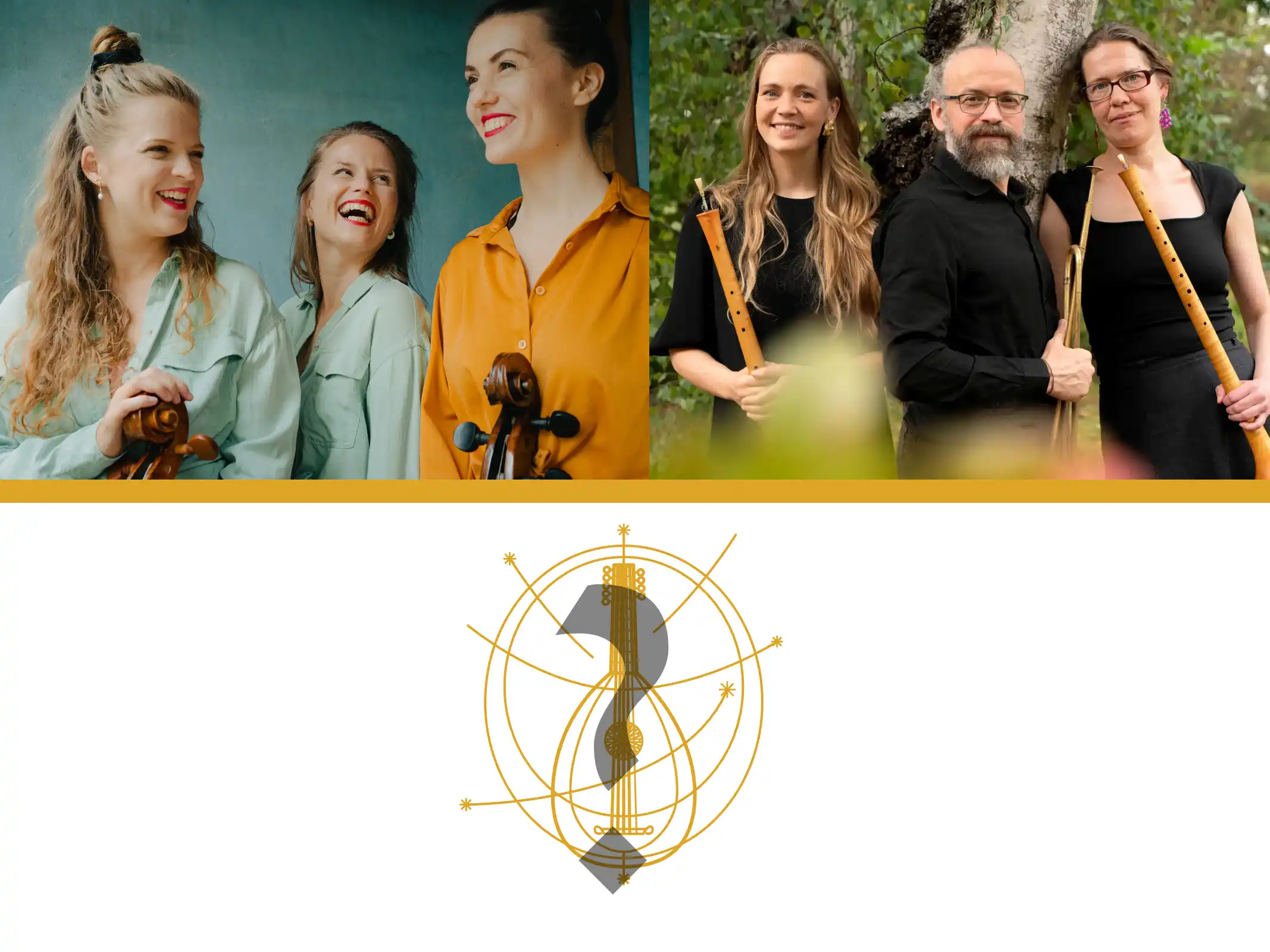
Ständchen à trois – A promenade concert with tiefsaits, Alta Bellezza and a surprise guest
On Saturday afternoon of the BERLINER FESTIVAL ALTER MUSIK, we wander with the ensembles tiefsaits and Alta Bellezza, as well as a surprise guest, from Villa Elisabeth to St. Elisabeth-Kirche – via Denmark, Bohemia and the Mediterranean.
tiefsaits: About Anna – musikalische Begegnungen mit Anna von Dänemark
In this program for gamba trio, 16th-century music traces the life stages of the Danish Princess Anna of Denmark (1532–1585), who, as Electress of Saxony under the name “Mother Anna,” became one of the most significant women of her time. Intelligent, energetic, and politically influential, she left such a lasting mark on the Saxon court that contemporaries mocked it as a “matriarchy.”
The musical journey begins at the Danish court, where Anna grew up as the daughter of Christian III. While she was being educated in herbal medicine, agriculture, and household management, Copenhagen was developing into a center of European musical culture. Works by Mogens Pederson, Hans Brachrogge, Truid Aagesen, and Jan Tollius reflect a close exchange with the Italian Renaissance.
In 1548, Anna married August of Saxony in Torgau. Their harmonious marriage took her to the intellectual heart of the Reformation, where Johann Walther had a decisive influence on Protestant church music. Sacred and secular works from this milieu accompany the second part of the program.
In Dresden and Freiberg, Anna demonstrated her extraordinary versatility. She promoted agriculture, medicine, and pharmaceutics; established laboratories; collected medicinal recipes; and dedicated herself to caring for the sick and to training midwives. She died of the plague in 1585 and was buried in the Freiberg Cathedral.
The program concludes with works from Anna’s circles in Dresden and Freiberg. As was the case at the Danish court, the influences of the Italian and Franco-Flemish Renaissance are encountered here – a thread that connects the various stages of Anna’s life.
Alta Bellezza: The Raven and the Lion – Matthias Corvinus, Jiří z Poděbrad and the Battle for the Bohemian Crown
Tumultuous times in 15th-century Bohemia: the condemnation and execution at the stake of the Bohemian religious reformer Jan Hus at the Council of Constance could not turn back the tide of the Hussite movement. In the following decades, a series of conflicts now known as the Hussite Wars shook Bohemia and the surrounding regions.
Alta Bellezza follows the musical traces of two luminaries of the mid-15th century as they strove against one another for the Bohemian crown: the Catholic king of Hungary, Matthias Corvinus, and Jiří z Poděbrad, Corvinus’s Hussite former father-in-law turned greatest adversary.
Our knowledge of Corvinus’s cosmopolitan court – marked by a prominent Renaissance culture profoundly influenced by his wife Beatrice of Aragon, who brought Neapolitan culture with her to Hungary – together with musical sources from Hussite spheres offers musical windows into their times.
The alta capella provided an indispensable soundtrack to courtly culture. Performing both art and dance music, it was omnipresent at courtly events, from military campaigns to coronations.
Within this program, Alta Bellezza weaves a rich tapestry, combining music as it would have sounded at the court of Corvinus and Beatrice with repertoire from previously untapped contemporary Bohemian sources.